

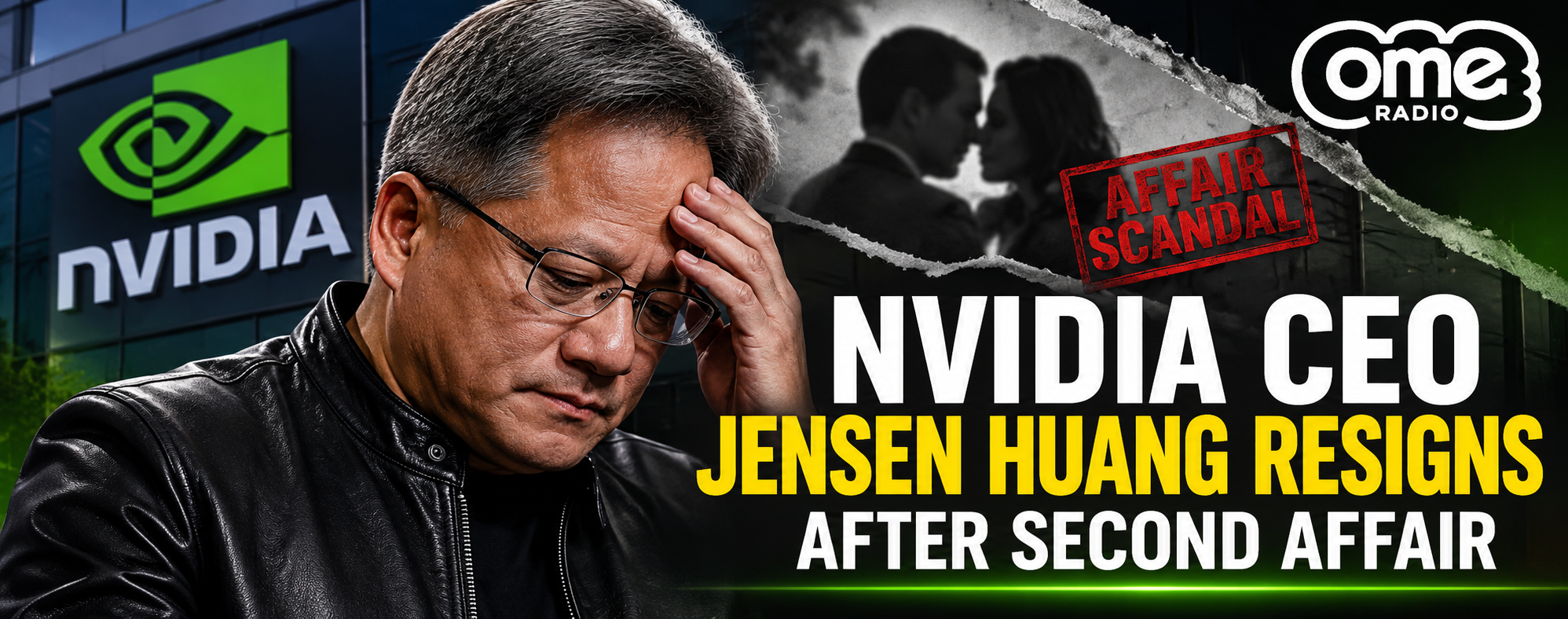

NVIDIA has been thrown into turmoil following the sudden resignation of its chief executive officer and co-founder, Jensen Huang, on November 12, 2026. The departure comes after a series of revelations about his personal relationships sparked widespread controversy, raising serious questions about leadership and the future of one of the world's most influential technology companies.
Huang, who helped establish NVIDIA in 1993, announced his departure following reports of multiple extramarital relationships. The controversy intensified after he publicly admitted to being unfaithful to his wife, apologising to his family, colleagues and shareholders for his actions.
The Scandal Behind the Resignation
The controversy initially attracted attention following reports of Huang's relationship with Alice Huang, a Chinese businesswoman and former executive at Singapore-based Megaspeed International, a company connected to NVIDIA's business network.
The situation became significantly more complicated when reports emerged suggesting that US intelligence officials suspected Alice Huang of having connections to Chinese intelligence. Authorities have raised concerns about potential attempts to obtain sensitive information and access to advanced artificial intelligence chips.
However, these allegations remain under scrutiny, and no definitive public conclusion has established that she was acting as a Chinese spy.
Further pressure emerged following reports of another relationship involving Kimberly Powell, an NVIDIA vice-president. Additional reporting subsequently identified allegations of another relationship with a separate company employee.
As the revelations continued to emerge, pressure surrounding Huang's position increased, ultimately resulting in his resignation.
NVIDIA Announces Leadership Changes
Following Huang's departure, NVIDIA announced that its chief financial officer, Colette Kress, would take over as interim chief executive officer while the company searches for a permanent replacement.
The board also appointed Harvey C. Jones as its first-ever chairman, signalling a significant change in the company's leadership structure.
Huang's resignation marks the end of an extraordinary period of leadership spanning more than three decades. Under his direction, NVIDIA transformed from a graphics processing company primarily associated with gaming into a global leader in artificial intelligence, data centres and advanced computing.
What Happens Next?
The departure raises important questions about NVIDIA's future. The company has become central to the global artificial intelligence industry, supplying the advanced processors used by some of the world's largest technology companies.
Investors and industry analysts will be watching closely to see whether the leadership transition affects NVIDIA's business relationships, future investments and position in the rapidly expanding AI market.
The controversy could also have wider implications for US-China technology relations, particularly as questions surrounding advanced chip exports and national security continue to attract political attention.
For now, NVIDIA faces the challenge of maintaining confidence among employees, investors and international business partners while navigating one of the most significant leadership crises in its history.
Jensen Huang's resignation represents a dramatic turning point for a company that he helped build into a technology powerhouse. Whether NVIDIA can maintain its momentum without its long-standing leader remains one of the biggest questions facing the technology industry.
Read more about this from the official NVIDIA website